
From Conversations to Collaborations: Capital Numbers’ Web Summit Qatar 2026 Highlights

6th February, 2026
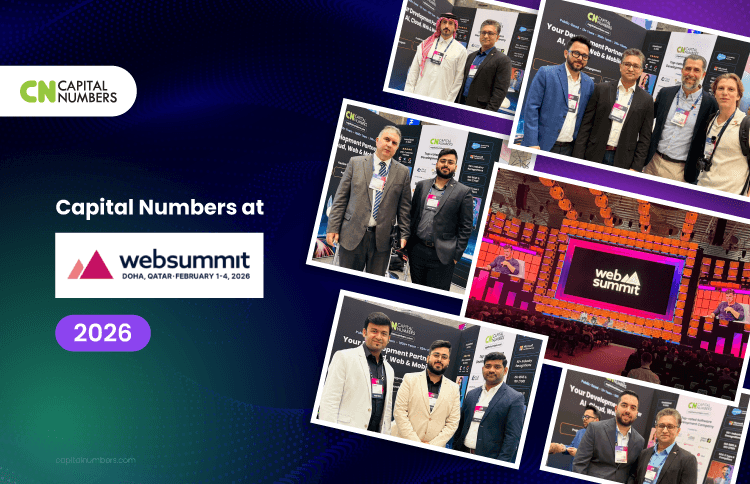
When a tech conference is sold out, the signal is clear: people didn’t come for generic inspiration - they came to ship partnerships, compare roadmaps, and make decisions. That’s exactly what Web Summit Qatar 2026 felt like on the ground in early February - conversations that started as quick hellos turned into deep product discussions, tough architecture questions, and real “how do we scale this?” moments.
For Capital Numbers, the event became a four-day sprint of discovery: understanding what businesses in MENA (and beyond) are prioritizing, where products are heading in 2026, and what collaboration models actually work when timelines are tight and quality expectations are high.
Key Highlights from Web Summit Qatar 2026
This edition set a new benchmark in Doha: over 30,000 attendees, 1,600+ startups, close to 1,000 investors, and 400+ speakers - a mix that naturally creates “collisions” between builders, buyers, and backers.
A few headline moments that stood out across the venue:
- Diversity in the ecosystem:
38% of participating startups were founded by women, pointing to a more balanced and inclusive innovation landscape. - Real outcomes, not just panels:
77 MoUs were signed between Qatari institutions and global tech companies, showing that meaningful deals and collaborations were taking shape on the ground. - Spotlight on emerging startups:
PITCH, the summit’s flagship startup competition sponsored by Jusour, took center stage on the final day, with early-stage startups presenting their ideas to a global audience. - Matchmaking at scale:
The event featured more than 180 AI-powered meetups, helping attendees connect quickly with peers facing similar challenges, such as platform modernization, data strategy, and product scaling.
Our Journey There: The Moments That Made It Real
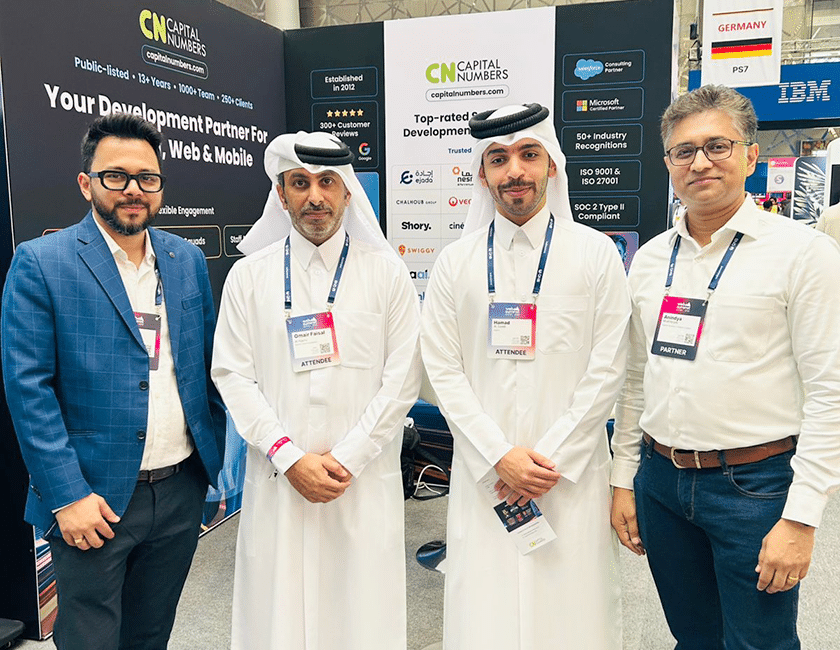
From the first morning at Doha Exhibition and Convention Center (DECC), it was clear: people weren’t there to collect brochures; they were there to solve problems.
We met founders building fast, teams modernizing legacy apps under pressure, and enterprises trying to align AI ambition with engineering reality. Between meetings, demos, and spontaneous corridor chats, one theme was common:
“We need to ship faster, stay secure, and control cost without breaking what already works.”
That’s exactly where Capital Numbers fits.
What We Saw Repeatedly across Conversations
If you want to know what the market is actually buying in 2026, listen to what people ask in 1:1 meetings. Across the summit, several themes kept resurfacing:
1. AI is moving from “features” to “workflows”
Many teams weren’t asking, “Can you add AI?” They were asking, “Which AI use cases reduce time-to-decision without increasing risk?” The practical focus was on:
- Customer support automation that doesn’t break brand tone
- Content operations (governance + speed)
- Analytics that business users can trust
- AI embedded into internal workflows (approvals, QA, triage, compliance)
This aligned with the event content - AI isn’t a track anymore; it’s a layer across everything from education to fintech to creator tools.
2. “Modernization” is less about rewriting, more about removing bottlenecks
Many discussions centered on legacy systems that work but can’t scale: fragile integrations, slow releases, or data pipelines that don’t support real-time insights. The questions were very specific:
- “How do we modernize without downtime?”
- “How do we decouple the front-end while keeping core stable?”
- “How do we stop tech debt from eating roadmaps?”
3. Engineering capacity is a strategy decision, not a staffing decision
This was one of the most consistent patterns: teams wanted delivery models they could depend on - clear ownership, predictable throughput, and senior oversight, especially for products with multi-market rollout plans.
Capital Numbers at Hall 2, Stand E208: What We Brought to the Table
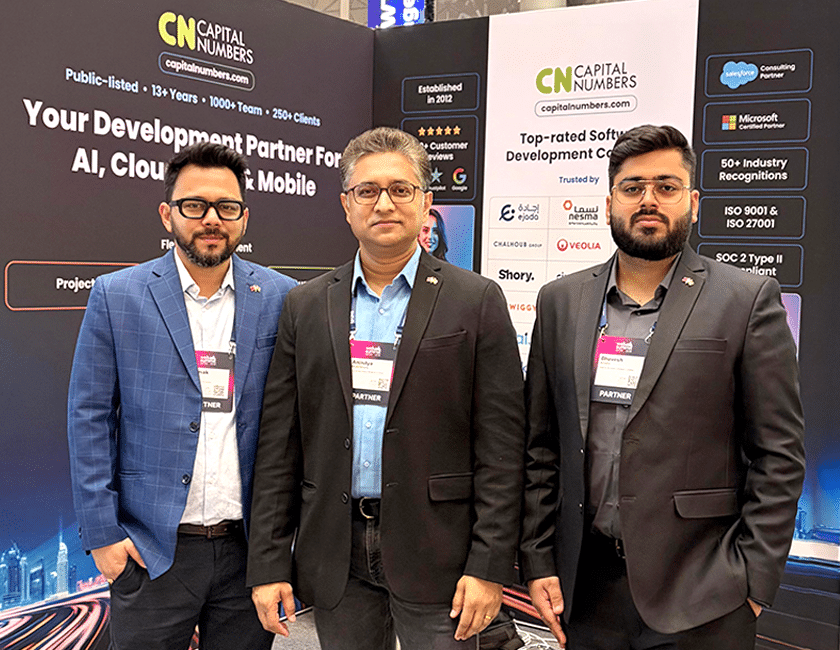
At the booth in the Web Summit Qatar, the intent wasn’t to “pitch everything.” It was to make it easy for visitors to map their current challenges to the right build approach, whether they were shipping a new product, stabilizing a platform, or scaling teams across time zones.
Our on-ground presence included Anindya Mukherjee, Sounak Das, and Bhavesh Khatri, and the conversations centered on three core areas: product development, scaling engineering teams, and modernizing existing platforms.
We also highlighted how we support global businesses across:
- Web & mobile engineering
- E-commerce development and optimization
- Cloud & DevOps enablement
- AI/ML and data engineering
- Dedicated team models aligned to outcomes
These were the areas visitors asked about most often, especially when they were balancing speed with reliability, or launching in multiple geographies with limited in-house bandwidth.
A note that resonated in multiple discussions: the fastest teams in 2026 aren’t the ones “coding more.” They’re the ones reducing friction - better requirements, tighter QA loops, release discipline, and measurable impact per sprint.
What We Achieved
We’re proud of what came out of the summit, not because it was “busy,” but because it was useful.
- A solid pipeline of meaningful conversations with startups, scale-ups, and enterprise teams looking for delivery partners
- Clear interest in cloud modernization and cloud-native development, especially around automation, reliability, and faster delivery.
- Several follow-up sessions planned, including discovery calls, architecture discussions, and solution deep-dives
- New partnership opportunities across product platforms, implementation support, delivery collaboration, and AI solution development
- Strong interest in practical modernization, focused on measurable improvements rather than large rewrites
- Growing demand for data platforms that support business teams, not just engineering needs
- Better clarity on regional priorities, where teams are investing and what they expect from engineering partners today
Our CEO’s Perspective
Our CEO, Mukul Gupta, summed it up well:
“The conversation has shifted from experimentation to outcomes. Teams want faster delivery, resilient platforms, and AI that solves real operational challenges, not innovation theater.”
That perspective matched what we consistently heard across meetings and roundtables.
What’s Next for Us
Events are great, but the real work starts now. Based on what we heard in Doha, our next steps are focused and practical:
- Deepening relationships with the teams we met (discovery → architecture → delivery plan)
- Packaging clearer “modernization pathways” for common legacy challenges (speed, reliability, cloud cost, platform sprawl)
- Building sharper enablement playbooks for scaling engineering teams fast, without sacrificing quality
- Investing further in AI and platform delivery so clients can operationalize AI and ship consistently
Whether we met in Doha or missed each other at earlier events, the conversation doesn’t need to stop here. Reach out to the Capital Numbers team to see how we can support your digital and AI journey with solutions that are fast, reliable, and built to scale.
Contact us today to start the conversation.