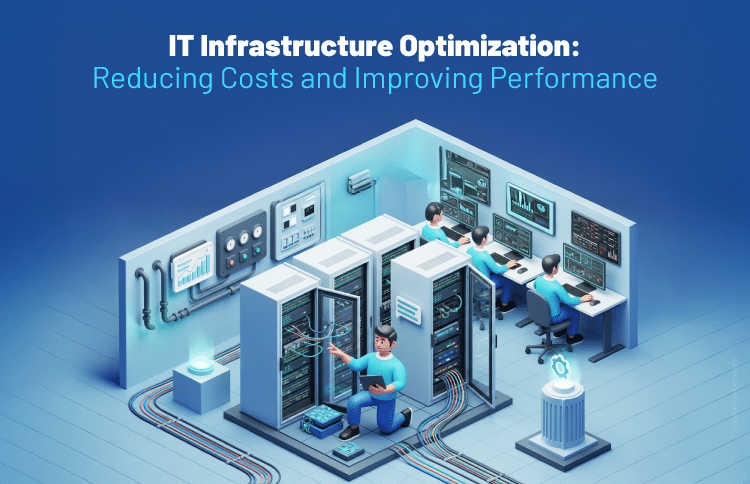

IT Infrastructure Optimization: Reducing Costs and Improving Performance
Table of Contents
Every organization today depends on IT infrastructure in some way. Whether it’s a startup running cloud-hosted applications or a large enterprise managing global data centers, infrastructure is the backbone that keeps operations running. But as systems grow, so do costs, complexity, and performance challenges. Servers get underutilized, cloud bills creep upward, applications slow down, and teams struggle to maintain reliability.
This is where IT infrastructure optimization becomes essential. It is not simply about cutting costs or upgrading hardware. True optimization means designing, configuring, and managing infrastructure so that resources are used efficiently, performance remains consistent, and spending aligns with business value. When done right, optimization reduces waste, improves speed, and strengthens scalability at the same time.
Why Infrastructure Optimization Matters More Than Ever
The rapid adoption of cloud computing, remote work, and digital services has dramatically changed how infrastructure is built and consumed. Organizations no longer rely only on physical servers; they operate hybrid environments that combine on-premises systems, public cloud services, SaaS platforms, and edge computing. While this flexibility brings advantages, it also creates new inefficiencies.
For example, many companies overprovision cloud resources to avoid performance issues, only to discover later that a large percentage of compute capacity sits idle. Others maintain legacy systems that require high maintenance costs but deliver limited business value. In both cases, spending increases without corresponding performance gains.
Optimization addresses this imbalance. It ensures that infrastructure scales according to real demand, workloads run on the most suitable platforms, and operational overhead remains manageable. In practical terms, optimized infrastructure means faster applications, lower downtime risk, and predictable IT budgets.
Common Sources of Infrastructure Waste
Before optimization can begin, organizations need to understand where inefficiencies typically arise. Infrastructure waste rarely comes from a single cause; it usually results from a combination of technical and operational factors.
One major source is overprovisioning. Teams often allocate more CPU, memory, or storage than necessary to ensure stability. While this approach prevents outages, it also leads to unused capacity. Over time, these small excesses accumulate into significant costs.
Another common issue is fragmented environments. Separate teams may deploy their own servers, cloud instances, or tools without centralized governance. This creates duplication, inconsistent configurations, and difficulty tracking usage. Without visibility, optimization becomes nearly impossible.
Legacy systems also contribute to inefficiency. Older applications often require dedicated hardware or outdated operating systems that are expensive to maintain. Even when utilization is low, organizations keep them running because migration seems risky or complex.
Finally, poor monitoring practices hide performance bottlenecks. Without accurate metrics, teams cannot identify underused resources or overloaded systems. Decisions become reactive instead of data-driven.
Strategies to Reduce Infrastructure Costs
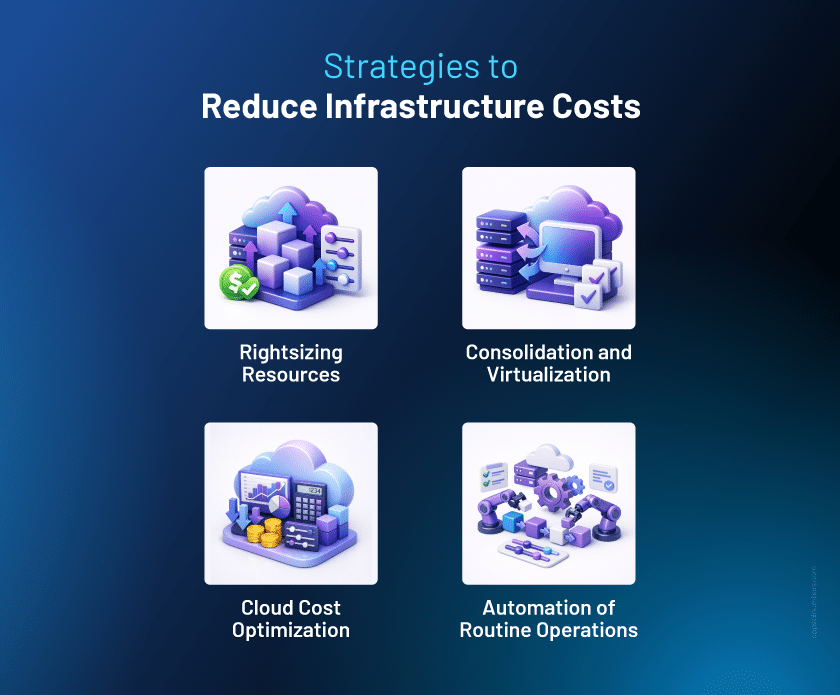
Reducing costs does not necessarily mean reducing capacity. The goal is to spend smarter by aligning resources with actual demand and business priorities. Several proven strategies help achieve this balance.
Rightsizing Resources
Rightsizing involves adjusting compute, storage, and network resources so they match real workload requirements. In cloud environments, this often means selecting smaller instance types or scaling down unused volumes. In on-premises setups, it may involve consolidating workloads onto fewer physical servers.
The key is measurement. Usage metrics such as CPU utilization, memory consumption, and I/O patterns reveal whether systems are oversized. By continuously analyzing these metrics, organizations can reduce waste without affecting performance.
Consolidation and Virtualization
Virtualization allows multiple workloads to run on a single physical server, increasing utilization rates and reducing hardware needs. Many organizations still operate underutilized machines that can be consolidated through virtualization or containerization.
Consolidation also applies to storage and networking. Unified storage platforms and software-defined networking reduce duplication and simplify management. Fewer physical devices mean lower energy consumption, maintenance costs, and licensing expenses.
Cloud Cost Optimization
Cloud platforms offer scalability, but they also introduce unpredictable spending if not managed carefully. Optimization techniques include using reserved or savings plans for predictable workloads, automatically shutting down non-production environments outside working hours, and selecting appropriate storage tiers based on access frequency.
Another important practice is eliminating orphaned resources. Snapshots, unattached disks, and unused IP addresses often remain active long after projects end. Regular audits ensure these hidden costs are removed.
Automation of Routine Operations
Manual infrastructure management consumes time and introduces inconsistency. Automation reduces both operational effort and human error. Tasks such as provisioning, patching, scaling, and backup scheduling can be handled through scripts or infrastructure-as-code tools.
Automation also enables dynamic scaling, where resources expand or shrink automatically according to demand. This prevents overprovisioning while maintaining performance during peak usage.
Improving Performance Through Optimization
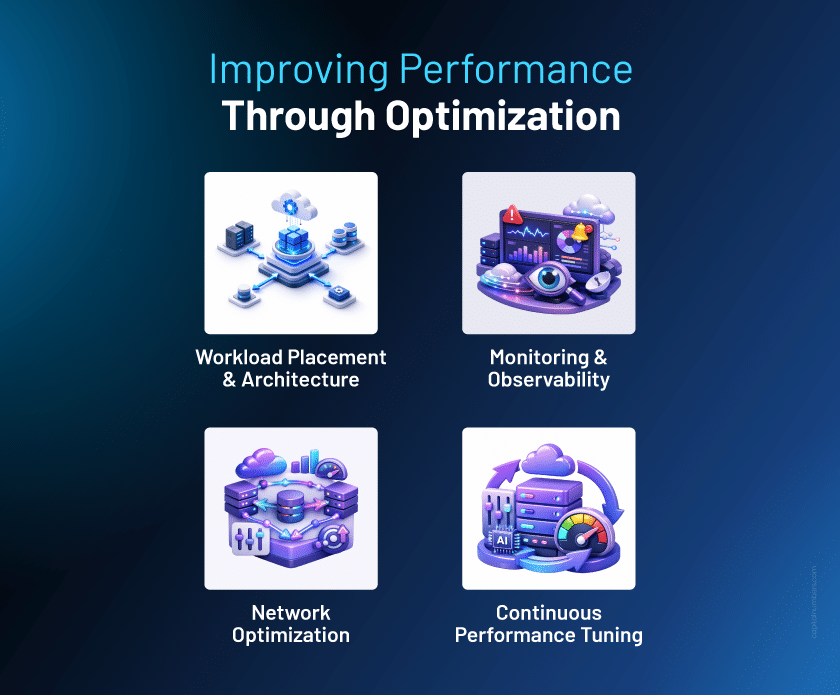
Cost reduction alone is not enough; infrastructure must also deliver reliable and responsive performance. Optimization improves performance by ensuring workloads run in environments suited to their characteristics.
Workload Placement and Architecture
Different applications have different requirements. High-performance databases benefit from low-latency storage and fast networking, while batch processing workloads may prioritize compute capacity over speed. Placing workloads on appropriate platforms – such as SSD storage, GPU instances, or edge locations – improves responsiveness without unnecessary expense.
Modern architectures also play a role. Microservices, container orchestration, and serverless computing allow components to scale independently. Instead of scaling an entire monolithic application, only the parts experiencing demand increase receive additional resources.
Monitoring and Observability
Performance optimization depends on visibility. Monitoring tools track metrics such as response time, throughput, and resource utilization. Observability goes further by correlating metrics, logs, and traces to identify root causes of slowdowns.
With accurate insights, teams can detect bottlenecks early. For example, high disk latency may indicate storage contention, while rising CPU wait time could signal insufficient compute capacity. Addressing these issues promptly prevents performance degradation.
Network Optimization
Infrastructure performance is not only about servers; network efficiency is equally critical. Poorly configured routing, limited bandwidth, or high latency can slow applications even when compute resources are adequate.
Optimization techniques include load balancing, traffic prioritization, and content delivery networks (CDNs). These approaches distribute traffic efficiently and reduce response time for users across different geographic locations.
Continuous Performance Tuning
Optimization is not a one-time activity. As workloads evolve, infrastructure must adapt. Continuous tuning involves reviewing metrics, adjusting configurations, and testing improvements regularly. Even small changes – such as optimizing database queries or adjusting cache policies – can significantly improve overall system speed.
The Role of Governance and Culture
Technical solutions alone cannot sustain optimization. Organizations need governance frameworks and cultural alignment to maintain efficiency over time.
Clear policies for resource provisioning prevent uncontrolled growth. For example, requiring approval for large instances or enforcing tagging standards helps track ownership and cost allocation. Chargeback or showback models also encourage teams to use resources responsibly by linking usage to budgets.
Cross-team collaboration is equally important. Infrastructure, development, and finance teams should share visibility into costs and performance metrics. When all stakeholders understand the impact of infrastructure decisions, optimization becomes a shared objective rather than an isolated IT task.
Measuring Success
To evaluate optimization efforts, organizations must define measurable outcomes. Cost savings are one indicator, but they should be considered alongside performance and reliability metrics.
Key performance indicators may include infrastructure utilization rates, application response times, downtime frequency, and cost per workload or transaction. Improvements in these metrics demonstrate that optimization is delivering both financial and operational benefits.
Regular reporting ensures progress remains visible to leadership. When decision-makers see the tangible value of optimization – such as reduced cloud bills or faster service delivery – they are more likely to support continued investment in efficiency initiatives.
Looking Ahead: Intelligent Infrastructure Optimization
Emerging technologies are transforming how optimization is performed. Artificial intelligence and machine learning can analyze vast amounts of infrastructure data to predict demand patterns, detect anomalies, and recommend configuration changes. These systems enable proactive optimization rather than reactive troubleshooting.
For example, predictive scaling models can allocate resources before demand spikes occur, preventing performance issues while avoiding unnecessary capacity during quiet periods. Similarly, automated anomaly detection can identify unusual spending or performance behavior early, reducing both risk and cost.
As infrastructure becomes more complex and distributed, intelligent optimization tools will play a growing role in maintaining efficiency at scale.
Conclusion
IT infrastructure optimization is not merely a cost-cutting exercise; it is a strategic approach to ensuring that technology resources deliver maximum business value. By rightsizing capacity, consolidating systems, automating operations, and continuously monitoring performance, organizations can reduce waste while improving reliability and speed.
In a digital environment where demand fluctuates and competition intensifies, optimized infrastructure provides a crucial advantage. It allows businesses to scale confidently, control spending, and deliver consistent user experiences. Ultimately, the goal is simple: the right resources, in the right place, at the right time – no more and no less.
Organizations that embrace this mindset move beyond reactive infrastructure management toward a sustainable, performance-driven future.


 Web Development
 Cloud Engineering
 Mobile App Development
 AI/ML/GenAI
 E-commerce
 Software Development
 UI/UX
UI/UX QA
QA Dedicated Teams