Natural Language Processing (NLP) Trends and Use Cases in 2026

Shubendu Biswas
Technical Architect
24th September, 2024
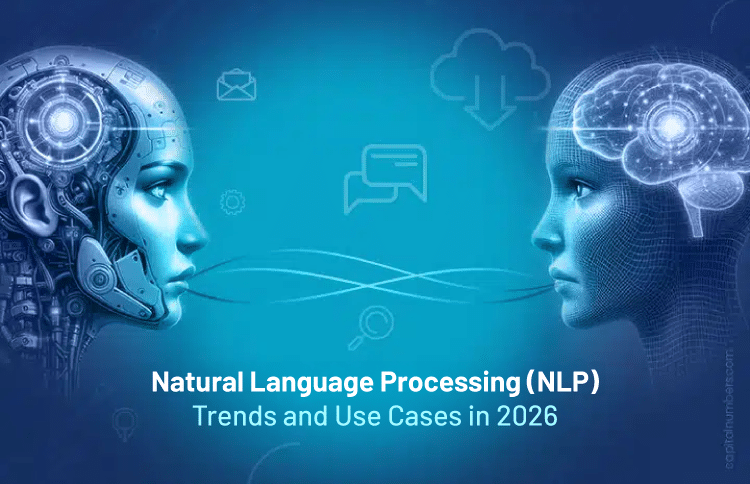
Natural Language Processing (NLP) is rapidly transforming the way we interact with technology, making it more intuitive, personalized, and powerful. As we navigate through 2026, NLP continues to be at the forefront of technological innovation, driving significant changes across various sectors. This comprehensive exploration delves into the latest trends and examines how they’re revolutionizing our daily experiences, with a particular focus on question-and-answer systems and large language model (LLM) agents.
1. Next-Level Question-and-Answer Systems
The evolution of Q&A systems powered by NLP has been nothing short of remarkable. These systems have transcended their role as mere search tools and have become sophisticated information companions.
Advanced Context Understanding
Modern Q&A systems now possess an unparalleled ability to grasp the nuances of queries. They can interpret context, understand implied meanings, and even factor in the user’s intent. This means that whether you’re asking about the intricacies of quantum entanglement or seeking advice on preparing a gourmet meal, these systems can provide tailored, relevant responses.
Real-Time Information Synthesis
One of the most impressive features of current Q&A systems is their ability to synthesize information from multiple sources in real-time. Instead of simply redirecting users to various web pages, these systems can collate data, cross-reference facts, and present a cohesive answer. This is particularly useful for complex queries that might require information from diverse domains.
Conversational Continuity
Advanced Q&A systems now maintain conversational context, allowing for follow-up questions and more natural interaction. If you ask about climate change and then follow up with “What can I do about it?”, the system understands that ‘it’ refers to climate change, providing a seamless conversational experience.
Multilingual and Multicultural Proficiency
As global communication becomes increasingly important, Q&A systems are adapting to understand and respond in multiple languages. More impressively, they’re becoming culturally aware, providing answers that are not just linguistically accurate but also culturally appropriate and sensitive.
2. LLM Agents: Your Digital Super Assistants
Large Language Models (LLMs) like GPT-4 and its successors have evolved into highly capable agents that can perform a wide range of actions. These digital super assistants are revolutionizing how we approach various tasks:
Task Management and Productivity
LLM agents have become indispensable for personal and professional task management. They can:
- Create and manage to-do lists, adapting to your personal productivity style
- Set up complex, interconnected reminders that understand context and priority
- Draft emails and messages that match your tone and style
- Analyze your calendar and suggest optimal scheduling for tasks and meetings
Enhanced Creative Writing Support
The role of LLMs in creative writing has expanded significantly:
- They can now generate outlines for long-form content, helping writers structure their thoughts
- Offer style suggestions to match specific genres or writing formats
- Provide character development ideas for fiction writing
- Assist in creating consistent and engaging story arcs
Advanced Data Analysis and Visualization
LLMs are pushing the boundaries in data analysis:
- They can now interpret complex datasets and explain trends in plain language
- Generate visualizations based on verbal descriptions of data
- Identify correlations and patterns that might not be immediately apparent to human analysts
- Translate technical findings into easy-to-understand reports for non-technical stakeholders
Emotional Intelligence and Support
An emerging trend is the development of emotional intelligence in LLM agents:
- They can now recognize emotional cues in text and respond with empathy
- Offer supportive conversations for users dealing with stress or anxiety
- Provide motivation and encouragement for personal development goals
- Act as a sounding board for ideas, offering constructive feedback
You May Also Read: Mastering the Art of Data Storytelling: A Complete Guide
3. Personalized User Experiences
NLP is driving a new era of hyper-personalization in digital interactions:
Adaptive User Interfaces
NLP-powered systems are now capable of dynamically adjusting user interfaces based on individual preferences and behaviors. This means that the layout, content, and even functionality of applications can change to suit each user’s unique needs and habits.
Predictive Recommendations
By analyzing past behaviors and understanding natural language inputs, NLP systems can now offer highly accurate predictive recommendations. This goes beyond product suggestions to include personalized content curation, tailored news feeds, and even anticipatory task suggestions.
Context-Aware Assistance
NLP systems are becoming more adept at understanding the user’s current context – including location, time of day, and recent activities. This allows for more relevant and timely assistance, such as suggesting nearby restaurants when it’s lunchtime or offering traffic updates before your usual commute time.
Personalized Health and Wellness
NLP is playing a crucial role in personalizing health and wellness advice. By understanding natural language inputs about symptoms, lifestyle, and preferences, these systems can offer tailored health recommendations, exercise routines, and even mental health support.
You May Also Read: Embracing Technology in Healthcare: The Transformational Journey with Innovative Solutions
4. Enhanced Language Translation
The field of language translation has seen remarkable advancements:
Real-Time Conversational Translation
NLP-powered translation tools now offer near-instantaneous translation of spoken conversations. This breakthrough is facilitating smoother international business meetings and enhancing global tourism experiences.
Context-Aware Translations
Modern translation systems can now understand and maintain context across languages. This means that idiomatic expressions, cultural references, and even humor can be more accurately translated, preserving the original meaning and tone.
Document Translation with Formatting Preservation
For business and academic purposes, NLP tools can now translate entire documents while maintaining the original formatting, including tables, charts, and specific layouts. This is particularly useful for legal documents, research papers, and business reports.
Multimodal Translation
Emerging NLP systems can translate not just text and speech, but also integrate visual elements. For instance, they can translate text overlaid on images or provide cultural context for visual elements in different regions.
5. Smarter Customer Support
NLP is revolutionizing customer service interactions:
Empathetic AI Agents
Customer service AI powered by NLP can now detect customer emotions and respond with appropriate empathy. This leads to more satisfying customer interactions and better resolution of complex issues.
Proactive Issue Resolution
By analyzing customer queries and past interaction data, NLP systems can now anticipate potential issues before they escalate. This allows for proactive customer support, reaching out to customers with solutions before problems fully manifest.
Seamless Human-AI Collaboration
Advanced NLP systems can now work in tandem with human customer service representatives. They can provide real-time assistance to human agents, offering relevant information and suggesting solutions, thus creating a more efficient hybrid support system.
Multilingual Support at Scale
With improved translation capabilities, customer support systems can now offer high-quality assistance in multiple languages, allowing businesses to provide consistent support globally without the need for large multilingual teams.
You May Also Read: The Future of Client Relations in IT Services: An AI Perspective
6. AI-Powered Content Creation
Content creation is undergoing a significant transformation:
Automated Journalism
NLP systems are now capable of generating news articles on data-driven topics like financial reports, sports results, and weather updates. This allows human journalists to focus on more complex, investigative stories.
SEO-Optimized Writing Assistance
Content creators can now use NLP tools that not only help with writing but also optimize content for search engines in real-time. These tools can suggest keywords, improve readability, and ensure content aligns with current SEO best practices.
Cross-Platform Content Adaptation
NLP tools can now help adapt content for different platforms and formats. For instance, they can help transform a long-form blog post into a series of social media posts or a script for a video, maintaining the core message while optimizing for each platform.
Brand Voice Consistency
For businesses, NLP tools are proving invaluable in maintaining a consistent brand voice across various content pieces and channels. These tools can analyze existing content and guide writers to maintain the same tone, style, and messaging across all communications.
Transform your business with our AI/ML development services. Let our experts build tailored, scalable AI solutions that drive innovation and smarter decision-making.
7. Enhanced Accessibility Features
NLP is making technology more inclusive and accessible:
Advanced Speech Recognition for Diverse Accents and Speech Patterns
Speech recognition technology has improved to understand a wider range of accents, dialects, and speech patterns, making voice-controlled devices and services accessible to a broader population.
Real-Time Captioning and Transcription
NLP-powered systems can now provide highly accurate real-time captioning for live events, video calls, and multimedia content. This is particularly beneficial for individuals with hearing impairments or those learning a new language.
Text-to-Speech with Emotional Inflection
Text-to-speech systems have evolved to include emotional inflections and natural-sounding speech patterns. This enhances the experience for users who rely on screen readers and makes audiobook narration more engaging.
Cognitive Assistance
NLP tools are being developed to assist individuals with cognitive disabilities. These tools can help simplify complex text, provide reminders, and offer step-by-step guidance for various tasks.
8. Interactive Learning and Tutoring
Education is being transformed by NLP technologies:
Adaptive Learning Paths
NLP-powered educational systems can create personalized learning paths for students. By analyzing a student’s responses and learning patterns, these systems can adjust the difficulty, pace, and style of content delivery in real-time.
Virtual Reality Language Immersion
Combining NLP with virtual reality technology, language learning programs now offer immersive experiences where learners can practice conversations in virtual environments that simulate real-world scenarios.
Automated Essay Grading and Feedback
NLP systems can now provide detailed feedback on essays and written assignments, not just on grammar and structure but also on content quality, argument coherence, and creative elements.
Collaborative Learning Facilitation
In online learning environments, NLP tools are being used to facilitate group discussions, ensuring equal participation, summarizing key points, and even mediating debates on complex topics.
9. Evolving Ethical AI Use
As NLP technologies become increasingly integrated into our daily lives, the ethical considerations surrounding their usage are gaining more focus. Here are some key areas of concern:
Privacy Concerns
NLP systems process vast amounts of personal data, making data privacy a critical issue. With the growing role of AI in our lives, ensuring user privacy becomes a major concern. Users must give informed consent before their data is used to train NLP models. Clear and transparent privacy policies are necessary to ensure users understand how their data is being utilized. Moreover, data anonymization is crucial to safeguard user identities and minimize the risks of data breaches. Companies also need to implement strong encryption protocols for data in transit and at rest to ensure security.
Bias Mitigation
NLP systems are only as good as the data on which they are trained. If the training data contains biases, these biases could be reflected in the model’s output. To address this, it is essential to train NLP systems using diverse datasets that represent a wide range of perspectives and experiences. Implementing automated tools for bias detection and conducting regular audits can help identify and correct biases that might emerge during the development phase. Moreover, human oversight remains critical to spot potential biases and take corrective action during deployment.
Accountability
As NLP systems become more autonomous, establishing clear accountability mechanisms is necessary to ensure that these systems function ethically. Companies need to comply with data protection regulations like GDPR and CCPA, which mandate how personal data is handled. Ethical assessments should be performed regularly to ensure that NLP systems are not causing harm to users or society. Many companies are now establishing AI ethics boards to oversee the ethical development and use of NLP technologies, ensuring that these systems adhere to responsible practices.
Ethical AI Education and Training
To ensure ethical NLP development, there is an increasing focus on educating developers, engineers, and organizations on AI ethics. It is important to raise awareness of the ethical implications of using NLP technologies, which will foster trust and transparency. By providing training on ethical AI practices and encouraging the certification of ethical standards, organizations can ensure that their NLP systems are built with responsibility in mind. Collaborating with regulators and policymakers is also essential to promote the ethical use of NLP technologies on a broader scale.
10. NLP in Business Automation
NLP is increasingly being used to automate various business processes, enhancing productivity and reducing operational costs. Here’s how NLP is changing business automation:
Automated Customer Service
NLP-powered chatbots and virtual assistants have significantly improved customer service operations. These AI-driven systems can efficiently handle routine customer queries, allowing human agents to focus on more complex issues. By understanding customer requests and providing timely, context-aware responses, NLP-based systems improve customer satisfaction. Additionally, these systems can provide 24/7 support, offering continuous assistance and reducing the need for a large customer service team. As a result, businesses can achieve cost savings while improving the quality of customer interactions.
Document Processing
NLP tools are transforming the way businesses handle documents. From contracts to invoices, companies process large volumes of paperwork daily. By automating the extraction of relevant data from these documents, NLP significantly reduces manual errors and speeds up workflows. For example, businesses can use NLP to summarize long reports or extract key data from legal documents, saving time and enabling teams to focus on more critical tasks. Furthermore, NLP’s ability to categorize and tag documents ensures that important information can be easily accessed and retrieved when needed.
Content Generation and Optimization
NLP systems are revolutionizing content creation by automating the generation of text-based content. Businesses can use NLP to automatically generate reports, news articles, or social media posts based on structured data. Additionally, NLP tools can optimize content for search engines in real-time, improving visibility and helping businesses reach a wider audience. These tools can also adapt content for various platforms, such as turning a detailed blog post into bite-sized social media updates, maintaining the core message while optimizing for each medium.
Workflow Automation
NLP is increasingly being used to automate workflow processes. By analyzing text-based communication like emails or chat messages, NLP tools can categorize tasks, prioritize them, and automatically schedule follow-ups. This helps businesses stay organized and ensures important tasks don’t slip through the cracks. NLP systems can also be used to assist in knowledge management by automatically organizing company documents and retrieving relevant information when needed. This ability to streamline workflows helps organizations become more efficient, enabling teams to make faster, data-driven decisions.
Final Thoughts
So, we can say that in 2026, Natural Language Processing (NLP) will continue to transform industries, enhancing user experiences, improving customer support, and enabling smarter business automation. With innovations in AI-driven content creation, multilingual support, and emotional intelligence, the future of NLP is full of opportunities.
If you’re looking for innovative AI solutions, Capital Numbers is here to help. Our expert team specializes in developing customized NLP applications that can drive your business forward. Want to discuss how we can use AI to take your business to new heights? Get in touch with us today!