Loading page…
Publicly listed on BSE · ISO 27001 & SOC 2 Type II compliant

Publicly listed on BSE · ISO 27001 & SOC 2 Type II compliant
A multinational professional services firm, operating across multiple legal entities, geographies, and regulatory environments manages a high volume of complex commercial agreements as a core part of its business.
A significant portion of these agreements involved multiple external counterparties alongside multiple internal legal entities: consortium arrangements, cross-border licensing deals, and joint delivery contracts where several parties carried distinct rights and obligations within a single agreement. The CLM platform which the firm had standardized on, supported only one counterparty per contract record, which was a structural constraint with no native workaround.
Industry
Manufacturing
Tech Stack
Country
USA
The client’s standardized Contract Lifecycle Management (CLM) platform supported only one counterparty per contract record. This structural constraint stood in direct opposition to the firm’s operational reality.
Specifically, the client required the ability to:
Because the platform follows a no-code, configuration-driven model, introducing custom code was not an option. A scalable, architectural workaround was required to bridge the gap between platform limitations and business requirements.
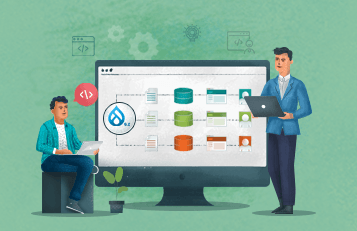
We engineered a solution by introducing a normalized background table called Contracting Parties. By establishing a one-to-many relationship between the parent contract and this new table, we bypassed the single-field limitation without altering the core platform code.
jhgjhgjg

New requirements introduced or updated through configuration, with no development cycle.
The client moved from a fragmented, flow-heavy setup to a single, controlled system for global compliance data collection. This shift reduced complexity, improved responsiveness, and placed control back with the business. More importantly, it created a scalable foundation for growth in an environment where regulatory change is constant.
A single framework replaced fragmented processes, reducing maintenance effort and risk.
Compliance logic is managed by business teams, improving speed and accountability.
No additional tools or licensing required beyond the existing Salesforce setup.
Users only see relevant fields, reducing errors and incomplete submissions.
New services and territories can be added without rework or system redesign.


Industry: Manufacturing

Industry: Manufacturing

Industry: Legal Services

Industry: Healthcare

Industry: Marketing & Advertising
Industry: eCommerce

Industry: Gaming and Sports

Industry: Finance

Industry: SaaS