Loading page…

Offshore Software Development
This guide is designed for teams who need to scale software delivery
without losing control over quality, speed, and execution.
Top-rated development company with 300+ reviews


Trusted By Global Brands, Growth Companies, And Enterprise Teams
.svg)










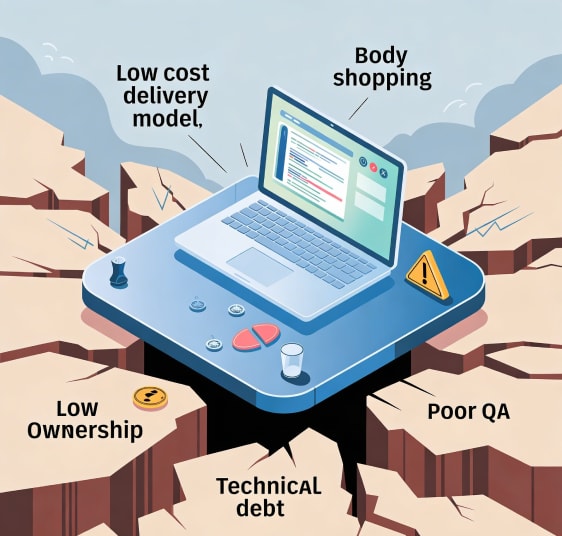
Offshore software development has evolved, but many companies still approach it with an outdated mindset. The old body shopping model, where developers are treated mainly as low-cost external resources, no longer supports modern product and engineering goals.
If your offshore strategy is simply labor arbitrage—renting cheap developers by the hour—you are building a technical debt time bomb that will cost 3x more to fix later. Over time, what appears to be a cost-saving approach can become a far more expensive operational burden.

Clear accountability for outcomes, not just assigned tasks

Strong engineering discipline, careful testing, and maintainable code

Faster releases without operational drag or constant supervision
This framework helps business leaders judge whether an offshore model is creating real delivery value or simply adding lower-cost capacity.
Offshore software development did not change because the model itself became new. It changed because software delivery became more demanding.
AI-assisted development tools can now generate routine code faster, reduce effort on repetitive tasks, and improve developer productivity. That has changed the baseline. Writing code is no longer the hardest part of building software, and raw coding output is no longer the main differentiator.
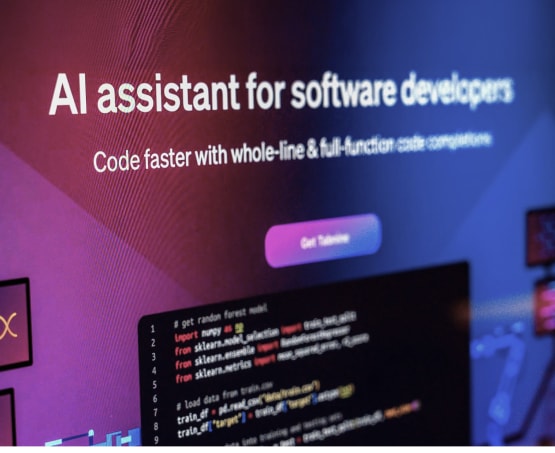
This has changed how CXOs should evaluate offshore development companies. The real question is no longer how many developers a partner can provide or how many hours they can bill. It is about whether the team can make sound technical decisions, maintain delivery discipline, and support better execution across the product lifecycle.
That is why modern offshore software development are no longer expected to function like external coding factories. The strongest teams operate as embedded delivery partners. They align with product priorities, work closely with internal stakeholders, follow shared engineering standards, and take responsibility for delivery outcomes.
This is where software outsourcing creates real value in 2026.

For organisations, this decision is not just about geography. It is about cost, control, speed, and execution quality. The right software outsourcing model depends on what you need to build, how closely the team must work with your business, and how much delivery maturity you expect from the partner.
A practical comparison should look at both cost and operating fit. In 2026, onshore teams in the US remain the most expensive option, while nearshore teams in Latin America and top-tier offshore teams in India offer lower hourly rates with different tradeoffs in collaboration, scalability, and talent depth.
Cost, collaboration, and scalability across software outsourcing models
Onshore (US)
Typical hourly rate
$120 to $180 per hour
Best fit
High-touch collaboration, highly regulated work, strong timezone overlap
Main tradeoff
Highest delivery cost
CXO view
Best when proximity matters more than budget efficiency
Nearshore (LATAM)
Typical hourly rate
$60 to $90 per hour
Best fit
Faster collaboration with North American teams, moderate cost control
Main tradeoff
Talent depth can vary by market and scale
CXO view
A strong middle ground for teams prioritising timezone alignment
Offshore (India, top tier)
Typical hourly rate
$40 to $65 per hour
Best fit
Scale, engineering depth, long-term product development, 24/7 delivery leverage
Main tradeoff
Requires disciplined partner selection and operating structure
CXO view
Often the best value when quality and accountability are built in
Model | Typical hourly rate | Best fit | Main tradeoff | CXO view |
|---|---|---|---|---|
Onshore (US) | $120 to $180 per hour | High-touch collaboration, highly regulated work, strong timezone overlap | Highest delivery cost | Best when proximity matters more than budget efficiency |
Nearshore (LATAM) | $60 to $90 per hour | Faster collaboration with North American teams, moderate cost control | Talent depth can vary by market and scale | A strong middle ground for teams prioritising timezone alignment |
Offshore (India, top tier) | $40 to $65 per hour | Scale, engineering depth, long-term product development, 24/7 delivery leverage | Requires disciplined partner selection and operating structure | Often the best value when quality and accountability are built in |
These are working benchmarks, not fixed price lists. Final rates vary based on team seniority, product complexity, domain expertise, and engagement model.
Onshore offers the closest operating alignment and is often the right choice for highly collaborative or heavily regulated work. Its main limitation is cost.
Nearshore is a strong option for North American businesses that value timezone overlap and easier day-to-day coordination. Its tradeoff is that talent depth can vary by location and provider.
Offshore is often the strongest choice for companies that need scale, engineering depth, and long-term delivery efficiency. Its success depends less on geography and more on the quality of the partner and the delivery model.
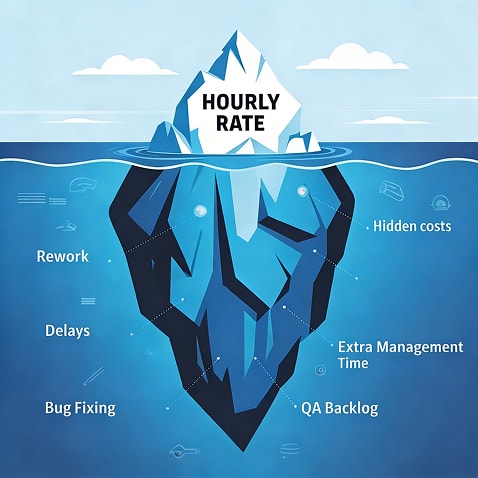
When execution quality is weak, the cost shows up across the delivery cycle. A weaker team can create:
A higher-rate team may appear more expensive on paper, but if it works with better engineering discipline, cleaner output, and stronger ownership, the total spend can be much lower.
Consider two developers working on the same feature.
Option A
Hourly rate: $15
Time taken: 40 hours
Total direct cost: $600
Outcome: bugs, repeated fixes, and regular oversight needed
Option B
Hourly rate: $30
Time taken: 15 hours
Total direct cost: $450
Outcome: cleaner execution, fewer issues, less management involvement
At first glance, the $15 per hour option looks cheaper. In reality, it costs more time, more review effort, and more delivery friction. The $30 per hour developer finishes faster, produces better output, and reduces the need for correction. That is a lower total cost of engagement.
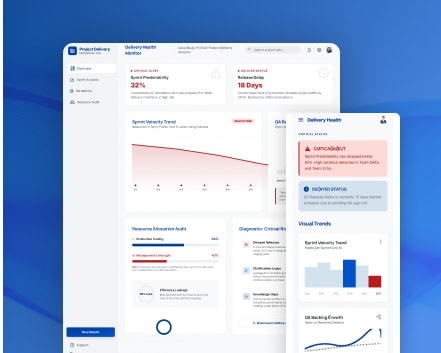
A FinTech company chose a low-cost offshore vendor to speed up feature delivery. The hourly rate looked attractive at first, but the delivery model started breaking down within a few sprints. Releases were delayed, the QA backlog kept growing, and sprint output became harder to predict. Product managers and engineering managers also had to spend more time reviewing work, clarifying requirements, and following up on unresolved issues.
The company then moved to a stronger offshore development company with a modestly higher hourly rate. Even though the direct engineering cost went up, the total burn rate came down. The new dedicated development team delivered cleaner code, reduced the QA backlog, improved sprint predictability, and required far less day-to-day oversight from internal leaders. The business paid more per hour but less to get stable, usable software delivered.
Choosing the right engagement model has a direct impact on delivery quality, speed, and control. In modern software development, that choice matters even more because products evolve continuously. Requirements shift, priorities change, and teams need to respond without losing momentum.
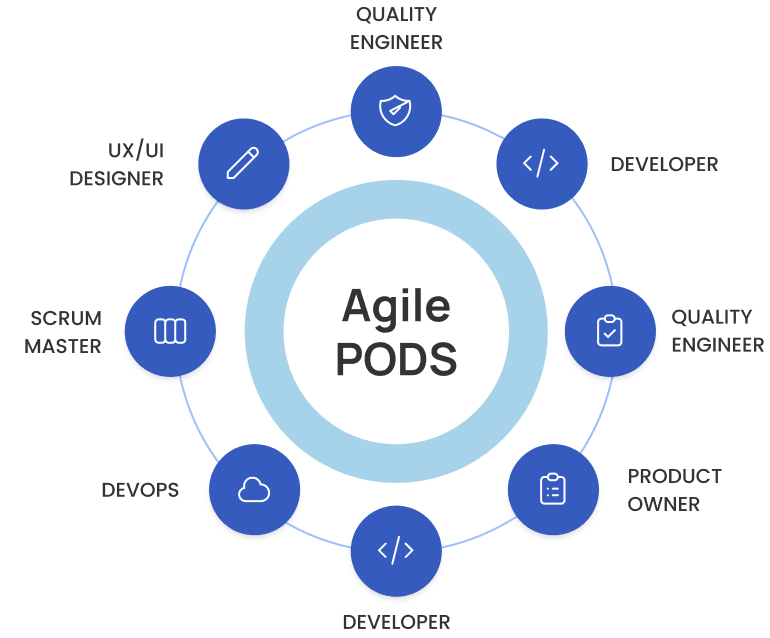
This is why all engagement models are not equally effective. Some work for limited situations. Others are far better suited for serious product development. For most growing software businesses, Agile Pods are the strongest model.
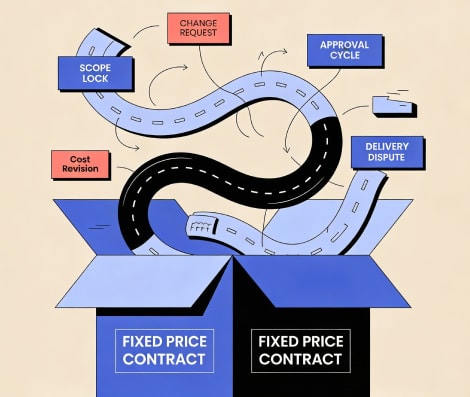
Fixed Price can work for clearly defined, low-change projects. But modern product development rarely stays fixed for long.
As products evolve, teams often need to:
Refine features based on user feedback
Adjust priorities based on market needs
Respond to technical constraints during development
Improve workflows after testing and review
In a Fixed Price model, these changes can quickly create friction. Every change may trigger scope discussions, approval cycles, cost revisions, or delivery disputes. What begins as a simple commercial model often becomes rigid and slow.
For CXOs, the bigger risk is not just budget misalignment. It is the loss of agility. When product decisions need to move faster than the contract structure allows, delivery suffers.
Time and Material gives more flexibility than Fixed Price, but it often becomes too loose if not managed carefully.
In many T&M engagements, the relationship stays transactional. The client pays for effort, but effort alone does not guarantee progress. Without a stronger operating structure, T&M can lead to:
Unclear ownership
Weak delivery accountability
Uneven team coordination
Overdependence on client side direction
Inconsistent connection to product outcomes
T&M is useful when flexibility is important, but on its own, it does not create a high-performance delivery model. It gives access to capacity, not necessarily to accountability.

Agile Pods solve the biggest weaknesses of both Fixed Price and pure T&M. An Agile Pod is a dedicated, cross-functional team that works as an integrated extension of the client’s in-house team. It is structured around clear delivery ownership, sprint-based execution, and shared accountability for outcomes.
This model works especially well for modern product development because it combines:
The flexibility to adapt
The structure to stay accountable
The continuity needed for long-term delivery
Improve workflows after testing and review
Instead of paying only for tasks or hours, the business gets a delivery unit that can plan, build, test, and improve continuously. For businesses, this means fewer handoff delays, clearer accountability, and better alignment between engineering effort and roadmap goals.
A polished sales pitch tells you very little about how an offshore team will actually perform once delivery begins. The real difference between a strong partner and a risky one usually appears in operating discipline, team stability, engineering standards, and how the vendor handles pressure when things do not go as planned.
That is why CXOs should not evaluate offshore vendors with generic questions. The right questions help you test delivery maturity before you commit budget, timelines, and product risk.
Use the checklist below to assess whether a vendor can offer accountable engineering capability rather than just external capacity.

Every offshore model carries risk. The difference is not whether risk exists, but whether the delivery structure is strong enough to control it.
At Capital Numbers, offshore delivery is designed with governance built into the operating model. That is how risk stays visible, manageable, and far less likely to affect product outcomes.

Communication issues are one of the most common reasons offshore engagements underperform. Misaligned priorities, unclear requirements, and delayed decisions can quickly slow delivery.
We reduce this risk through:
This creates a steady communication rhythm instead of relying on ad-hoc updates.
If you are unsure whether your current offshore model is delivering at the level it should, a closer review can help reveal what is working and what is limiting performance.
We help companies assess whether their offshore model is actually supporting delivery or quietly creating avoidable friction.
Get a clear assessment of your current offshore setup, including delivery gaps, quality risks, team structure issues, and areas that may be slowing execution.
Test a Capital Numbers Agile Pod in a controlled, low-risk engagement focused on measurable delivery value, engineering quality, and execution speed.
This is a practical evaluation, not a generic sales conversation. The goal is to give you a clearer view of your current model and whether a stronger delivery structure could improve outcomes before you make a larger commitment.
Test our execution with a zero-risk, 2-week Agile Pod pilot.If we don't deliver value, you don't pay.
That is the point. Less guesswork. More evidence. Better decisions.
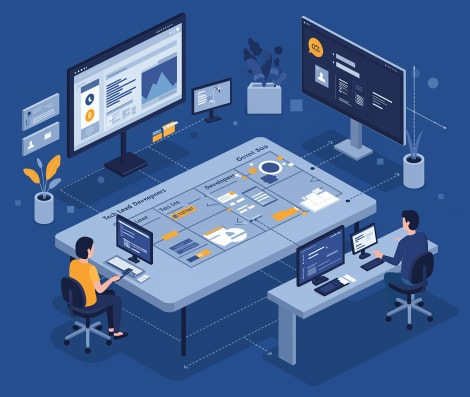
A typical Agile Pod can include:
 1 Tech Lead
 2–4 Senior Developers
 1 QA Engineer
This structure gives the pod both technical depth and execution balance. The Tech Lead drives architecture decisions, technical direction, and engineering quality from the start. The Senior Developers handle core development work with speed and ownership. The QA Engineer ensures disciplined testing, issue detection, and release confidence.
Depending on the product, the pod can also work closely with product managers, designers, DevOps specialists, or data experts. The structure can be scaled up or adjusted based on the product roadmap, delivery stage, and technical needs. But the core idea remains the same: the team is set up to deliver outcomes, not just effort. At Capital Numbers, this model is supported by stable pod ownership, senior engineering oversight, and sprint-based governance. Delivery visibility is maintained through regular reviews, clearly defined escalation paths, and close alignment with client priorities.

Fixed Price is often too rigid for evolving products. Pure T&M is often too loose to deliver strong accountability. Agile Pods offer the better middle path.
They give businesses the flexibility to adapt, the structure to maintain control, and the continuity to improve delivery quality over time. For CXOs looking to build dependable engineering capability rather than simply buy external effort, Agile Pods are the model that makes the most strategic sense.
Team stability matters. High churn usually leads to repeated onboarding, loss of product context, and inconsistent delivery quality.
Strong vendors are confident enough to let you assess the real team, not just the sales layer or senior leadership.
In 2026, AI-assisted development is common. What matters is whether the vendor has a disciplined process to review generated code for security, quality, maintainability, and architectural fit.
Delivery delays often come from dependency gaps, not coding alone. A mature vendor should have a clear process for flagging blockers, escalating issues, and keeping momentum.
No team is immune to change. The real test is whether knowledge is documented, shared, and protected well enough to avoid delivery disruption.
Code review should not be optional or informal. It should be a defined part of engineering governance with clear standards and accountability.
Problems happen in every delivery environment. What matters is whether the vendor has a structured path for resolving technical, delivery, and communication issues quickly.
CXOs need visibility beyond task completion. A strong vendor should report progress, risks, blockers, quality concerns, and delivery confidence in a transparent way.
Seniority affects architecture quality, decision-making, and execution speed. A low-cost team with very limited senior talent often creates more downstream cost.

CNBC TV-18 Most Trusted Brands India 2021

The Manifest - Most Reviewed Software Developers 2024

Financial Times - High-Growth Companies Asia-Pacific 2024

ET NOW - Best Tech Brands 2024

TIMES - Business Awards 2024 - Excellence in AI Solutions

ET Now- Best Tech Brands 2025

NASSCOM - SME Inspire 2025 - Growth Leadership in Tech Services

Clutch - Global Winner 2026

India Cross-Border Excellence Awards 2026

Times Business Awards 2025 - Excellence in AI Solutions
CNBC TV-18 Most Trusted Brands India 2021
The Manifest - Most Reviewed Software Developers 2024
Financial Times - High-Growth Companies Asia-Pacific 2024
ET NOW - Best Tech Brands 2024
TIMES - Business Awards 2024 - Excellence in AI Solutions
ET Now- Best Tech Brands 2025
NASSCOM - SME Inspire 2025 - Growth Leadership in Tech Services
Clutch - Global Winner 2026
India Cross-Border Excellence Awards 2026
Times Business Awards 2025 - Excellence in AI Solutions
Fill Out the Form and Get Guaranteed Response Within 24 Hours
Expert guidance you can trust. No pitch, just expert solutions.