Loading page…


Build and validate customized RAG experiences faster with InstaRAG, Capital Numbers’ reusable AI knowledge accelerator.
Instead of building the core RAG application from scratch, start with a working foundation and focus on what matters to your business: your knowledge, users, experience, integrations, and requirements.

250+ Global Clients
Trusted worldwide

600+
Engineering Professionals

14+ Years
of Enterprise Delivery Experience

SOC 2 Type II, ISO 9001, ISO 27001
Compliant

Top Rated
on Clutch, G2, Trustpilot
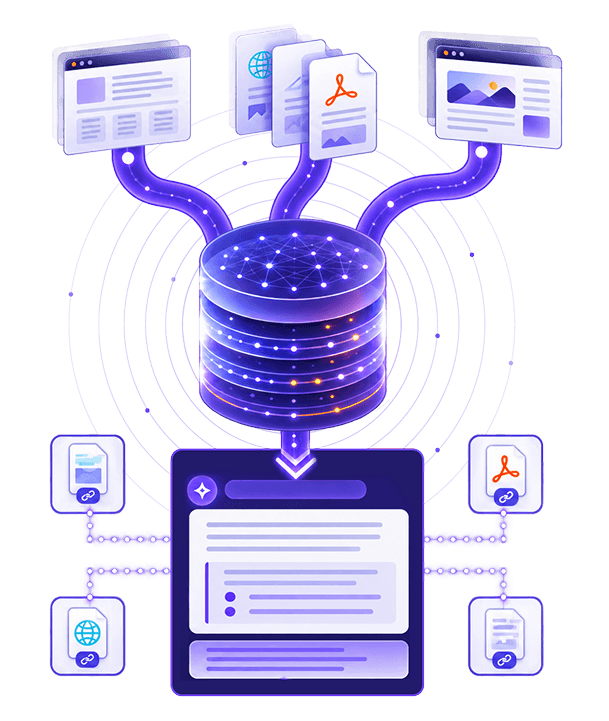
InstaRAG is a reusable RAG accelerator developed by Capital Numbers for creating customized AI knowledge assistants.
It provides the underlying content ingestion, indexing, retrieval, conversation, and application foundation required for a working RAG experience.
Capital Numbers configures and extends that foundation around the client’s business use case rather than rebuilding the same core infrastructure for every implementation.
InstaRAG is an engineering accelerator, not an off-the-shelf chatbot SaaS product.
What is it?
A reusable RAG engineering accelerator
Best suited for
Defined knowledge retrieval and conversational AI use cases
Enterprise integrations
Evaluated and scoped based on the implementation
Can you start with a pilot?
Yes
Current knowledge sources
Usable public website content and selected PDF documents
Best starting point
Experience InstaRAG or validate a focused use case
Production path
Managed or solutioned around the required deployment environment
The easiest way to understand InstaRAG is to experience it with real information.

Use selected website content or supported documents.
The content is prepared within a dedicated knowledge environment.
Users interact with the knowledge through a conversational interface.
InstaRAG searches the indexed knowledge for information relevant to the question.
Retrieved source information is used as context when generating the answer.

A real section of approved website or document content.

A natural-language question based on that information.

An answer generated using retrieved source content.

The underlying information used to support the response.

An example of how the assistant behaves when the requested information is outside the available knowledge.
InstaRAG is designed for organizations that want to explore or implement RAG
without starting every project from zero.
Choose InstaRAG when you:

Test whether conversational access to business knowledge solves the intended problem before funding a larger implementation.

Move sooner from an idea to something users can interact with because the underlying RAG foundation already exists.

Make approved website content, documentation, product information, policies, or other knowledge easier to access through natural-language questions.

Start with a defined use case and add integrations, deployment requirements, security, and workflows as the business case develops.

Focus engineering effort on your unique requirements instead of recreating common RAG components.

Help customers find information about products, services, policies, documentation, and frequently asked questions.

Give employees a conversational way to find information from approved organizational knowledge.

Help sales teams retrieve relevant product, service, policy, or company information when they need it.

Make detailed product information, manuals, documentation, and other approved content easier to explore.
Help customers find information about products, services, policies, documentation, and frequently asked questions.
Give employees a conversational way to find information from approved organizational knowledge.
Help customers find information about products, services, policies, documentation, and frequently asked questions.
Give employees a conversational way to find information from approved organizational knowledge.
Help sales teams retrieve relevant product, service, policy, or company information when they need it.
Make detailed product information, manuals, documentation, and other approved content easier to explore.
The current InstaRAG foundation supports defined RAG
implementations using:
Use selected usable public website information as part of the assistant’s approved knowledge.
Add supported PDF documents to extend the knowledge available for retrieval.
Maintain separate implementations for different users, purposes, or knowledge sets.
Retrieve relevant information from indexed knowledge before generating a conversational response.
Maintain conversational context across supported user interactions.
Configure dedicated experiences and access controls appropriate to the implementation.
01
Identify the users, questions they need answered, knowledge required, and intended business outcome.
02
Provide the website content and supported documents required for the defined use case.
03
InstaRAG processes the approved content and prepares it for retrieval.
04
When a user asks a question, InstaRAG searches the indexed knowledge for relevant information.
05
The retrieved information is provided as context to the conversational AI workflow.
06
Evaluate real questions, retrieval quality, knowledge gaps, response quality, and user experience.
07
Move a validated use case toward the appropriate production environment, integrations, controls, and support model.
01
Identify the users, questions they need answered, knowledge required, and intended business outcome.
You do not need to begin with a large production implementation.

Experience
See how conversational retrieval works with real content.

Pilot
Validate a defined use case using approved business knowledge and representative user questions.

Production
Move a successful implementation into a production environment with the appropriate capacity, monitoring, operations, and support.

Enterprise
Extend the solution with additional knowledge sources, integrations, authentication, security, governance, workflows, and enterprise architecture where required.
Start small enough to learn. Scale when the use case proves its value.
Many enterprise RAG implementations eventually need access to additional systems and information.
Capital Numbers can evaluate requirements involving:
 SharePoint
 Salesforce and CRM platforms
 Document repositories
 Databases
 Business applications
 APIs
APIs SSO
SSO Role-based access
 Private networking
 Client-controlled cloud environments
 Additional security
 Governance requirements
These capabilities are not presented as native baseline InstaRAG functionality.
The required systems, permissions, data flows, workflows, security requirements, and any read/write interactions are evaluated during solutioning and scoped accordingly.
Enterprise AI requires clear decisions around what information the AI can use, who can access it, where it runs, and how data is handled.
Depending on the project, Capital Numbers can evaluate:

CN-managed or client-controlled cloud environments based on the agreed architecture.

Authentication, SSO, role-based access, and user-specific controls where required.

Defined knowledge sources, environments, data flows, and access policies.

Model and provider choices aligned to architecture, governance, quality, and commercial requirements.

Operational monitoring, support, optimization, and release-management requirements appropriate to the deployment.
For enterprise implementations, hosting architecture, AI services, data handling, retention, access controls, and security measures are confirmed during solutioning.
CN-managed or client-controlled cloud environments based on the agreed architecture.
Authentication, SSO, role-based access, and user-specific controls where required.
CN-managed or client-controlled cloud environments based on the agreed architecture.
Authentication, SSO, role-based access, and user-specific controls where required.
Defined knowledge sources, environments, data flows, and access policies.
Model and provider choices aligned to architecture, governance, quality, and commercial requirements.
Operational monitoring, support, optimization, and release-management requirements appropriate to the deployment.
For enterprise implementations, hosting architecture, AI services, data handling, retention, access controls, and security measures are confirmed during solutioning.
InstaRAG gives you a faster starting point. Capital Numbers provides the engineering capability required to take the use case further.

Start from an existing accelerator instead of rebuilding common RAG components for every project.

Combine AI engineering with the application development required to turn a prototype into a usable business system.

Extend validated use cases into APIs, business applications, data platforms, and enterprise workflows.

Design deployment around the infrastructure, identity, networking, governance, and operational requirements of the engagement.

Move from validation into product development, cloud, data, integration, QA, DevOps, and managed engineering without changing technology partners.
InstaRAG can be one starting point within a broader AI initiative.
Explore related Capital Numbers capabilities:
 RAG Development Services
 AI Agent Development
 AI Integration Services
A RAG accelerator is a reusable technical foundation for developing retrieval-augmented generation applications without creating every underlying component from scratch.
It can provide common capabilities such as ingestion, indexing, retrieval, conversation handling, and application logic so implementation teams can focus sooner on the business use case.
InstaRAG is Capital Numbers’ reusable RAG accelerator for creating customized AI knowledge assistants.
It provides an existing application and retrieval foundation that can be configured and extended around a defined business use case.
No.
InstaRAG is an engineering accelerator rather than a fixed SaaS chatbot product. The underlying foundation is reusable, while the final implementation can be configured around the client’s knowledge, users, business requirements, deployment, and integrations.
The current InstaRAG foundation supports usable public website content and selected PDF documents.
Additional enterprise systems and knowledge sources require technical evaluation and implementation.
Potentially.
These integrations are not native baseline functionality. The relevant APIs, permissions, data flows, workflows, and security requirements need to be validated before they are committed to scope.
Because the underlying RAG foundation already exists, a defined use case can move toward a working experience faster than a comparable ground-up implementation.
Actual timing depends on knowledge sources, content volume, customization, integrations, testing, security requirements, and deployment environment.
No.
RAG can improve grounding by providing relevant source information before a response is generated, but it does not guarantee that every response will be correct.
Production implementations can include testing, evaluation, retrieval optimization, guardrails, and additional controls appropriate to the use case.
Yes.
A focused pilot is often the most practical way to determine whether the knowledge, retrieval quality, user experience, and business case justify moving into a wider production implementation.
Have a website, set of documents, or business knowledge problem that could benefit from conversational AI?
Start with the information your users need and the problem you want to solve.
We can help determine:
Whether InstaRAG is the right starting point
What can be validated through a focused pilot
Which knowledge should be included
What additional integrations may be required
What would be needed to move into production

Fill Out the Form and Get Guaranteed Response Within 24 Hours
Expert guidance you can trust. No pitch, just expert solutions.