Loading page…

The client owns a multi-tenant SaaS application solution. They provide this SaaS solution to different shopping mall management companies or tenants looking to manage their mall buildings, retail spaces, leases, and sales. The solution makes the overwhelming task of mall management a lot easier.
Industry
Technology
Tech Stack
But, before this SaaS app was in place, the client used to maintain an outdated app to manage mall admins or tenants. Issues started rising when the number of tenants began growing.
The outdated app was in a legacy-old monolith architecture with a single codebase. So, a small module change in a specific tenant admin would require redeployment of the entire app. This would make app maintenance difficult.
.jpg&w=2048&q=90)
Moreover, a centralized solution for tenant management was missing. The client had to repeatedly re-login individual tenant admins to view desired data.
The backend and frontend lacked segregation. So, any technological change in the app's backend would lead to unwanted changes in the frontend.
The underlying data structures and code needed to be revised. No 'data isolation' logic would make each tenant's data visible to the rest, thus risking privacy.
Such surmounting issues negatively impacted app usage. The client contacted Capital Numbers to get expert help. They wanted us to transition the legacy app to a multi-tenancy SaaS architecture to improve mall management.
Capital Numbers took note of the client’s requirements and appointed two backend developers, one frontend developer, and one tech lead for the job. We started by transitioning the legacy-old monolith architecture to microservices in ASP.NET Core.
We chose microservices to make the app a collection of small, independent modules. So, any module change in a tenant admin would not affect the other tenant admins. We standardized the flawed code and data and stored them using SQL solutions.
Next, we developed a CRM dashboard to help the client see all tenant records in a single panel. We then logically isolated each tenant’s data from other tenants to bring in data privacy. Moreover, we added two-factor authentication (2FA) to ensure safe tenant onboarding.
Our developers segregated the frontend and backend structures to improve operations. Systematic segregation helped us run heavy computational tasks in the backend while keeping the frontend lightweight and unaffected. We also established handshaking protocols to automate connections between some parts of the legacy system and the modernized version.
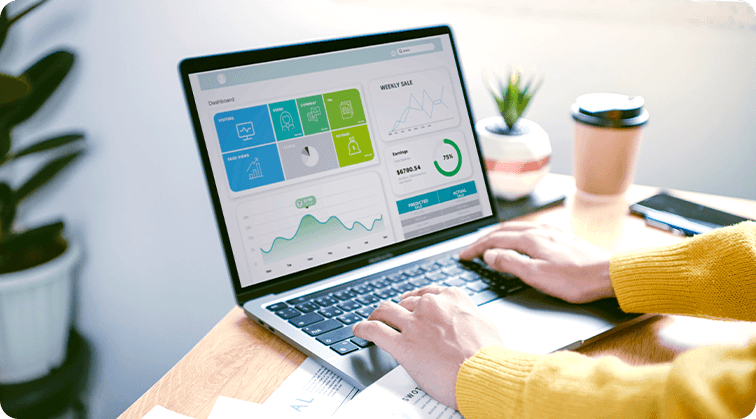
Allowing individual tenants to edit entries like mall building sales, leases, and contracts was essential. So, we added dropdown buttons and mechanisms for that.
Generating sales and lease reports for mall admins to make informed decisions was also crucial. So, we used SSRS for that. Additionally, we prepared the system for future API integrations and Power BI analytics, thus updating the solution.
Our backend (.NET) and frontend (JavaScript, HTML) experts handled the entire work using an iterative approach. We had a tight timeline of three months to deliver the solution. However, we successfully modernized it and deployed it in AWS within the predefined time.




The resulting product is a highly scalable mall management software enhanced with a multi-tenancy model. It offers the following benefits to its users:
The multi-tenant app offers the client a 360° overview of the entire master tenant data while preserving individual data structures.
The security mechanisms ensure each tenant’s data is private, maintaining clear separation between tenants.
So, even if every tenant’s resources run on the shared infrastructure - they’re isolated and protected.
The app segregates tenant data based on user login, ensuring each query accesses only the relevant information.
Each tenant can view and edit their sales and reports within their dedicated tenant areas without affecting the entire system.
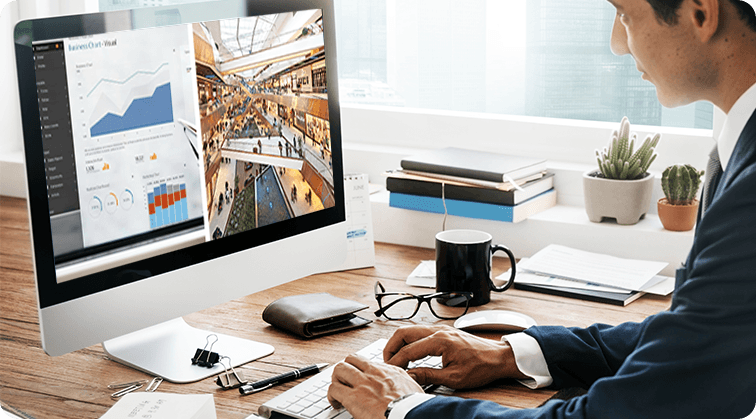
The 2FA solution secures tenant onboarding and authenticates new users, thus preventing fraud.
Reports and analytics help each tenant make informed decisions about mall management.
Modern data storage solutions keep data safe even if the app scales to house more tenants.
We ensured this multi-tenant shared infrastructure functions smoothly on any operating system (OS) - Windows, Linux, and cloud servers.
The client is happy to have launched this shared infrastructure that isolates and secures each tenant while allowing each tenant to optimize their resources within a shared environment.


Industry: Technology

Industry: Technology

Industry: Technology

Industry: Technology

Industry: Technology

Industry: Technology